
Briefings and sessions
A single room, a single problem, and a working answer at the end of it. Usually the first engagement, and often the one that establishes whether a longer relationship is worth either side's time.
A 360° implementation model covering architecture, operating model, workforce and execution, delivered by people who have put these systems into production rather than described them.
Explore the engagements → Take the readiness assessment →From symposia at DePaul and the University of Kentucky to the field labs and boardrooms where the decisions get made.
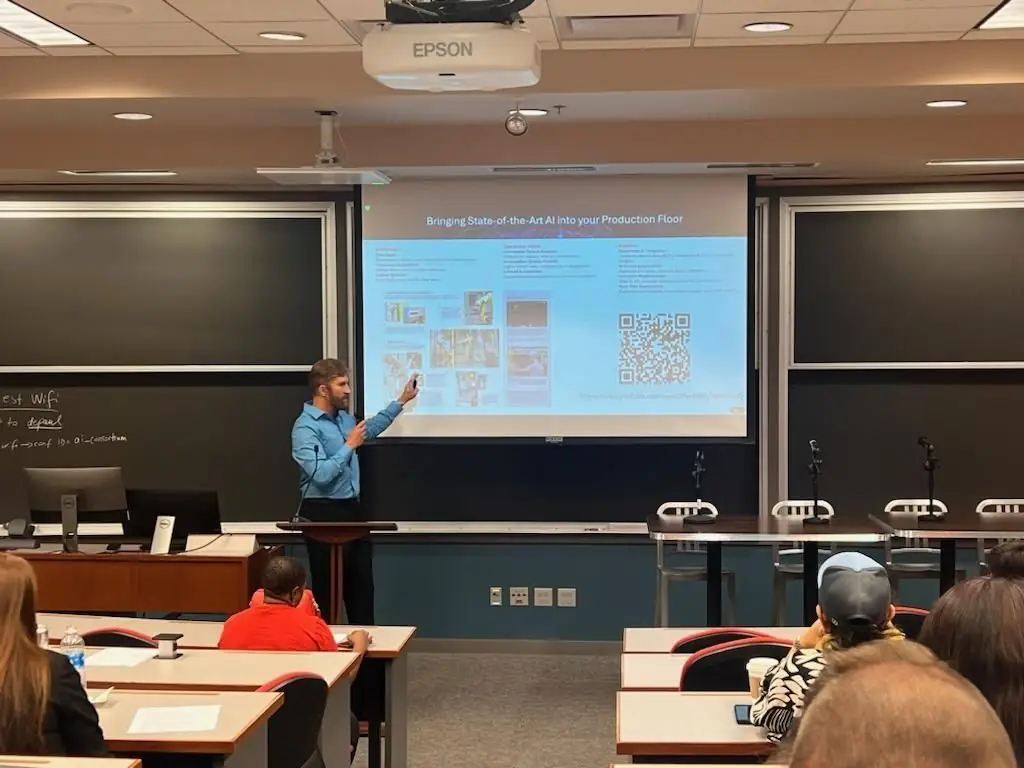
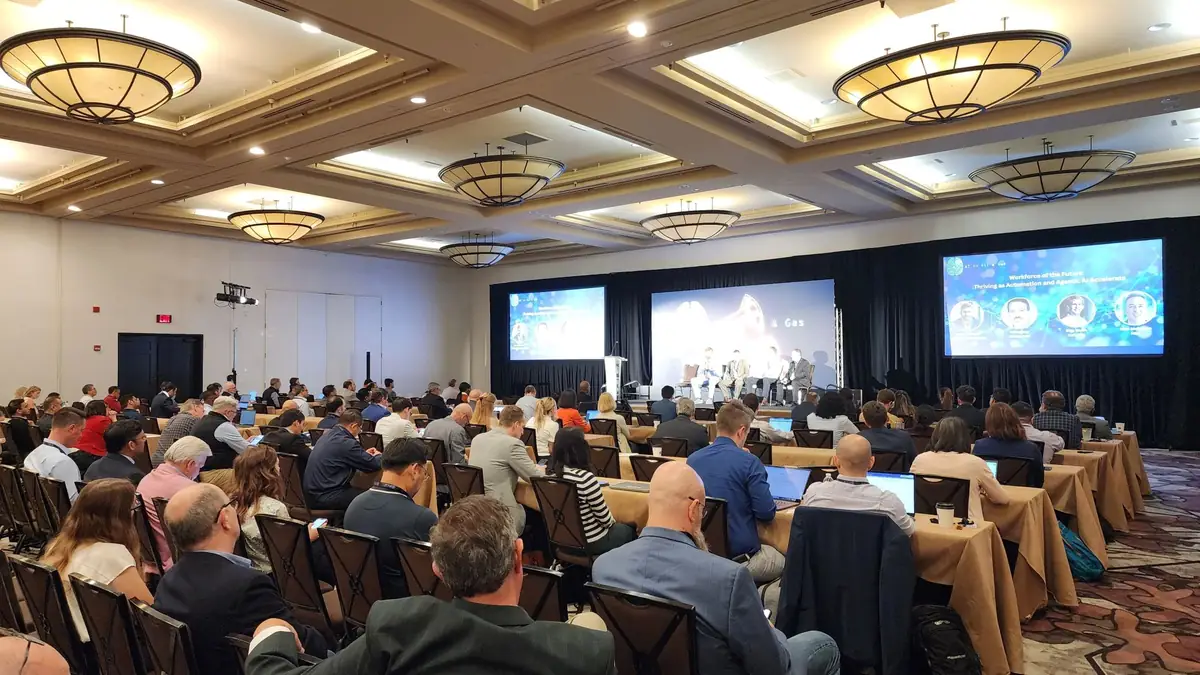
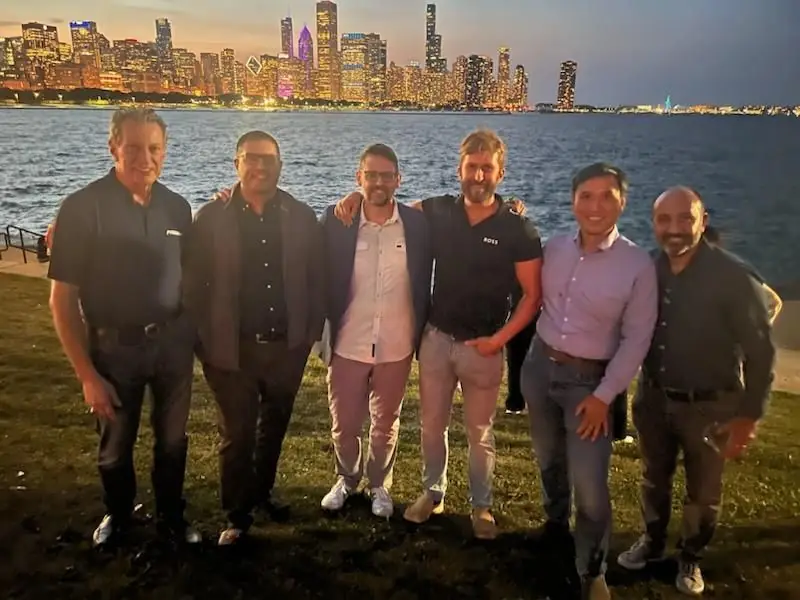
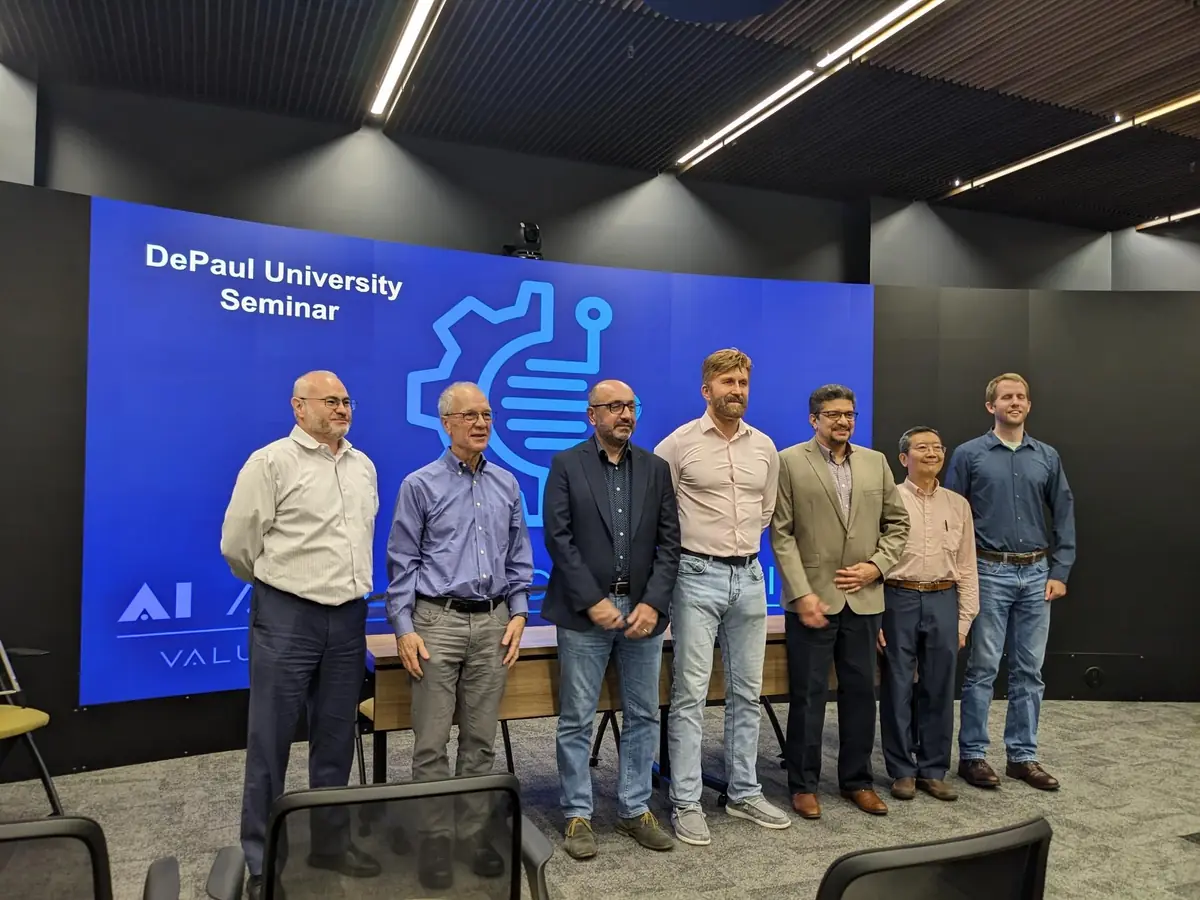
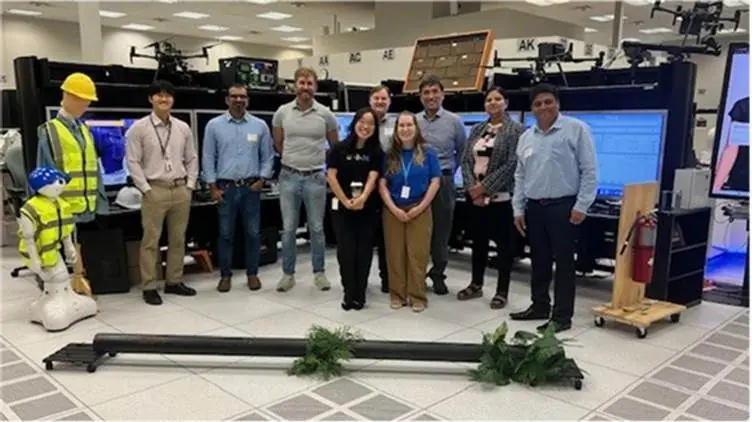
The gap the consortium's councils keep reporting is not a capability gap. Organisations can get a system working. What they cannot reliably do is get it into an operation, keep it there, and account for it when it is wrong. The June 2026 symposium at Texas A&M found the same thing from the distribution side: the barrier was resistance in the middle of the organisation and institutional knowledge that had never been written down, ahead of data quality and ahead of the technology.
That is a different problem from the one most training addresses. A prompt engineering class does not change decision authority. A tools demonstration does not redesign an escalation path or tell a supervisor who is accountable at three in the morning. The programme exists for the second problem, and it is built as an implementation model rather than a curriculum.
The five dimensions are not modules to be completed in order. They are the five places where a deployment stalls, and the programme works through whichever of them is load-bearing for a given organisation.
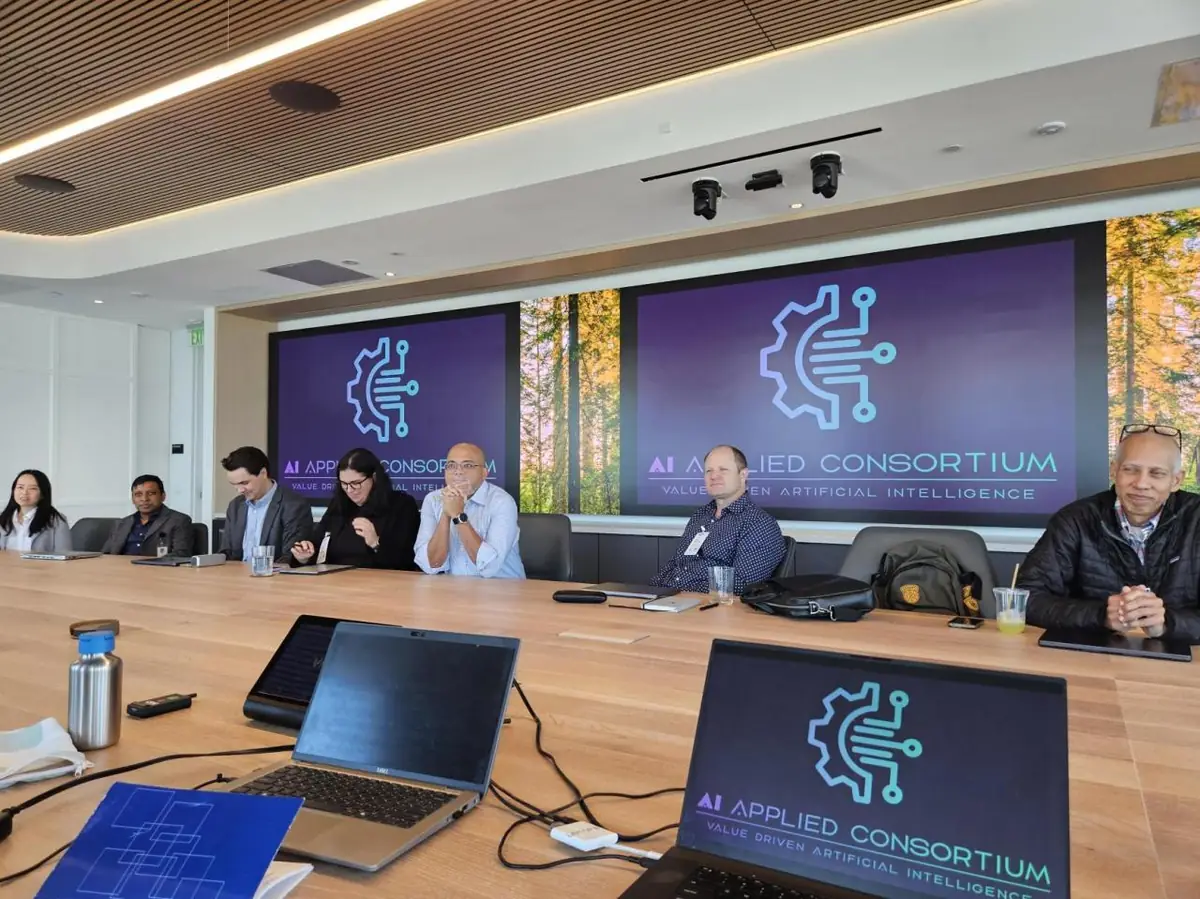
Each dimension is a place where deployments fail, and each carries its own working practice.
Agent architectures, orchestration, memory and tool use. Integration into enterprise systems. Edge and cloud deployment models.
Embedding agents into real workflows, the collaboration model between people and agents, and the exception and escalation paths that decide whether anyone trusts the result.
New roles such as agent managers, AI operations and digital supervisors. Governance and accountability. The KPI and incentive redesign without which adoption stalls.
What becomes possible beyond efficiency: new revenue models, rethought value chains, and the places where these systems create asymmetry in a particular industry.
Trust in systems that are not deterministic, where decision authority sits between a person and an agent, and how change resistance behaves inside an operating business.
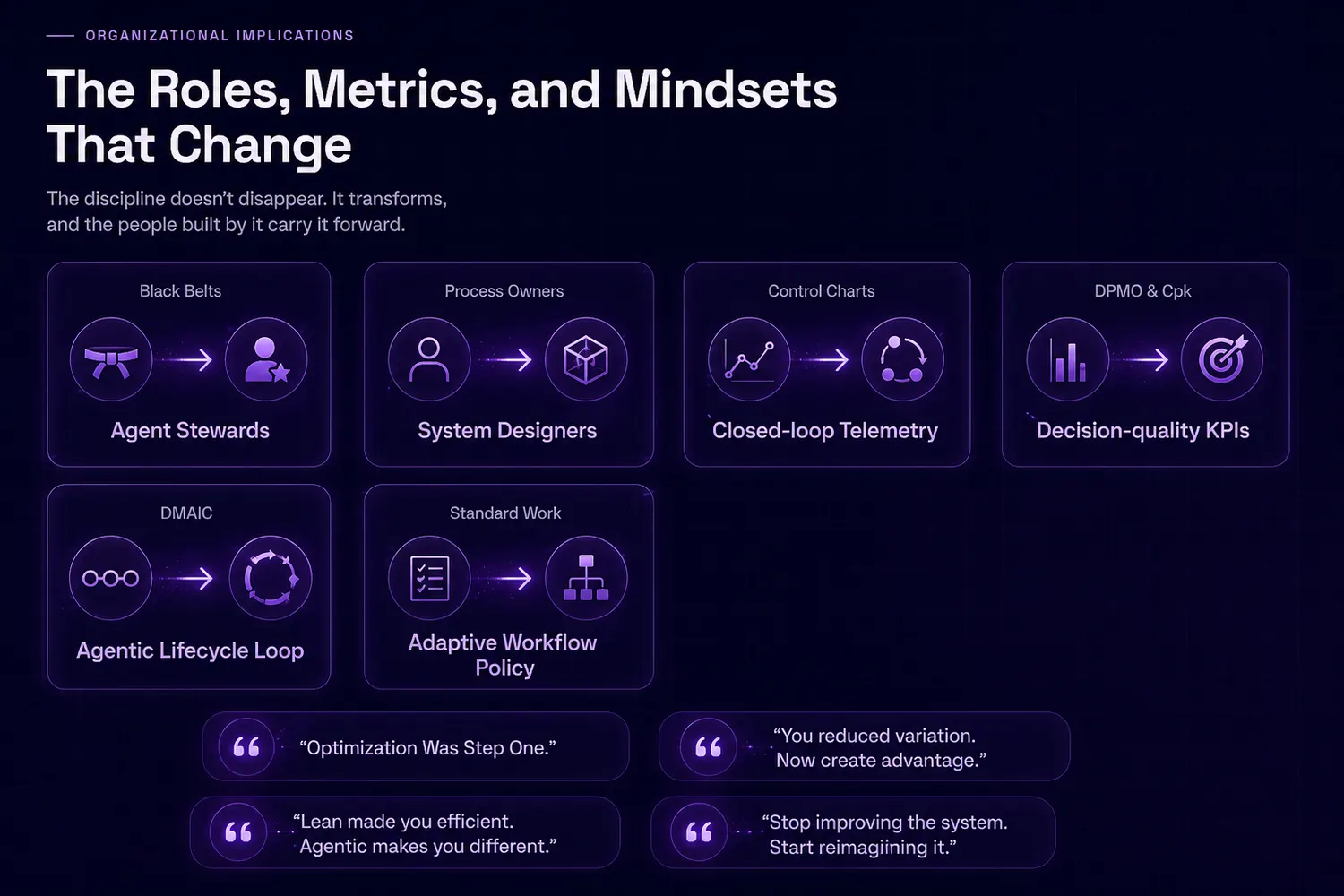
A dedicated path for organisations rooted in Six Sigma, Lean and operational excellence.
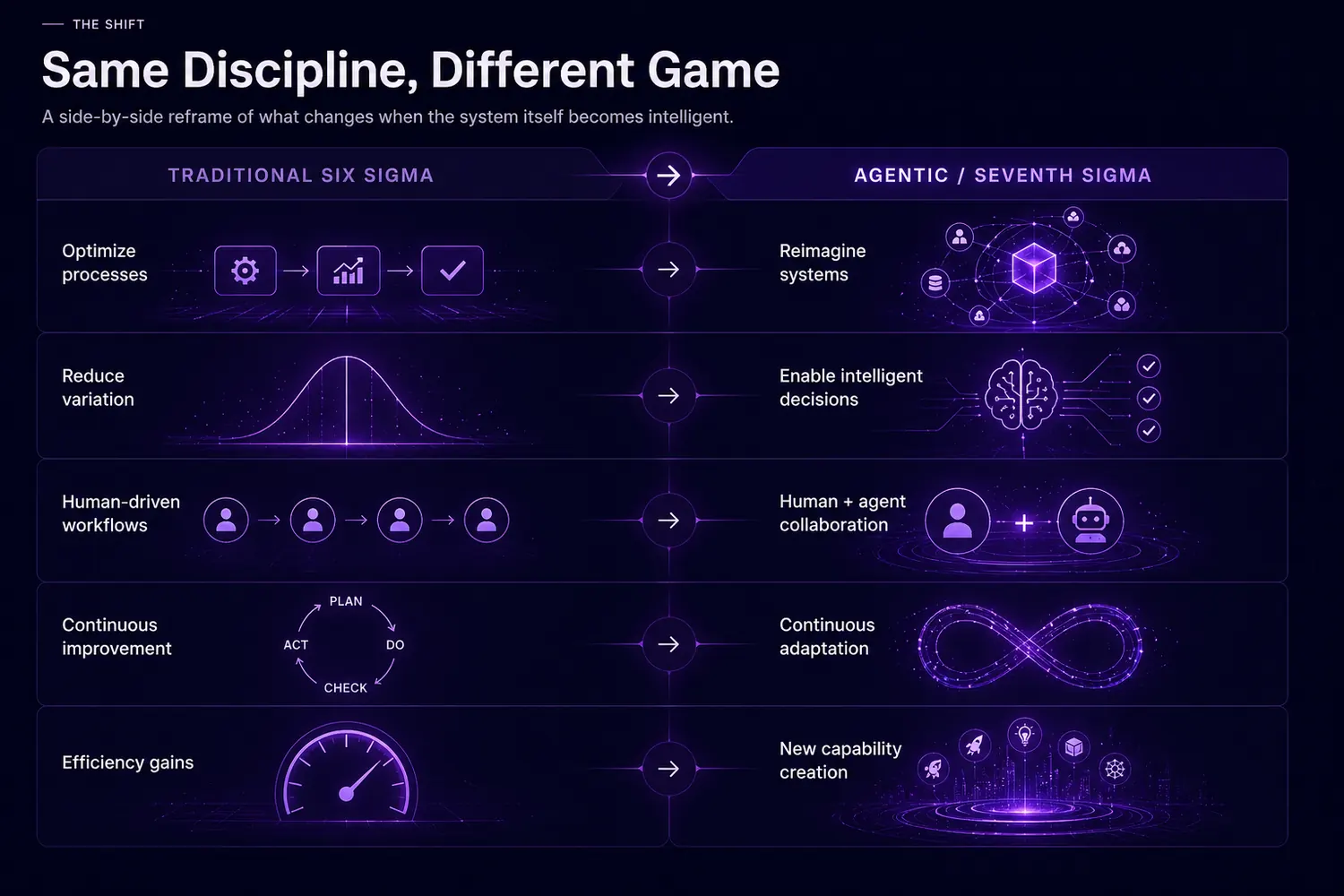
Six Sigma was the right answer to the question of its time. It optimised processes, reduced variation and built a generation of operating leaders, and the discipline it instilled is a prerequisite rather than a casualty. What has changed is the unit of optimisation. Agentic systems move it from the process to the decision, and everything downstream of that assumption has to be re-examined.
The track works through where the discipline still holds and where it breaks: static processes against non-deterministic systems, standardisation against adaptive intelligence, control charts against control loops, monitoring that used to page a person and now triggers an agent, and the most expensive mistake of all, which is optimising a workflow that should have been redesigned.

The consortium meets an organisation where it is and moves it forward through structured engagements. Each is a vector into the same model, scoped to where the organisation sits on the path.
A single room, a single problem, and a working answer at the end of it. Usually the first engagement, and often the one that establishes whether a longer relationship is worth either side's time.
Longer form, hands on, and built around the organisation's own systems and its own failure modes rather than a worked example.
A standing relationship with consortium practitioners across a deployment, which is what organisations need most and ask for least.
A place in the consortium's published work, which is how a member's internal practice becomes something the rest of an industry can read and argue with.
Pricing is shaped by an organisation's scale, the size of the audience and where the engagement is delivered, and it is communicated through a quote rather than a rate card. The readiness assessment comes first, because it is what routes an organisation to the right engagement.
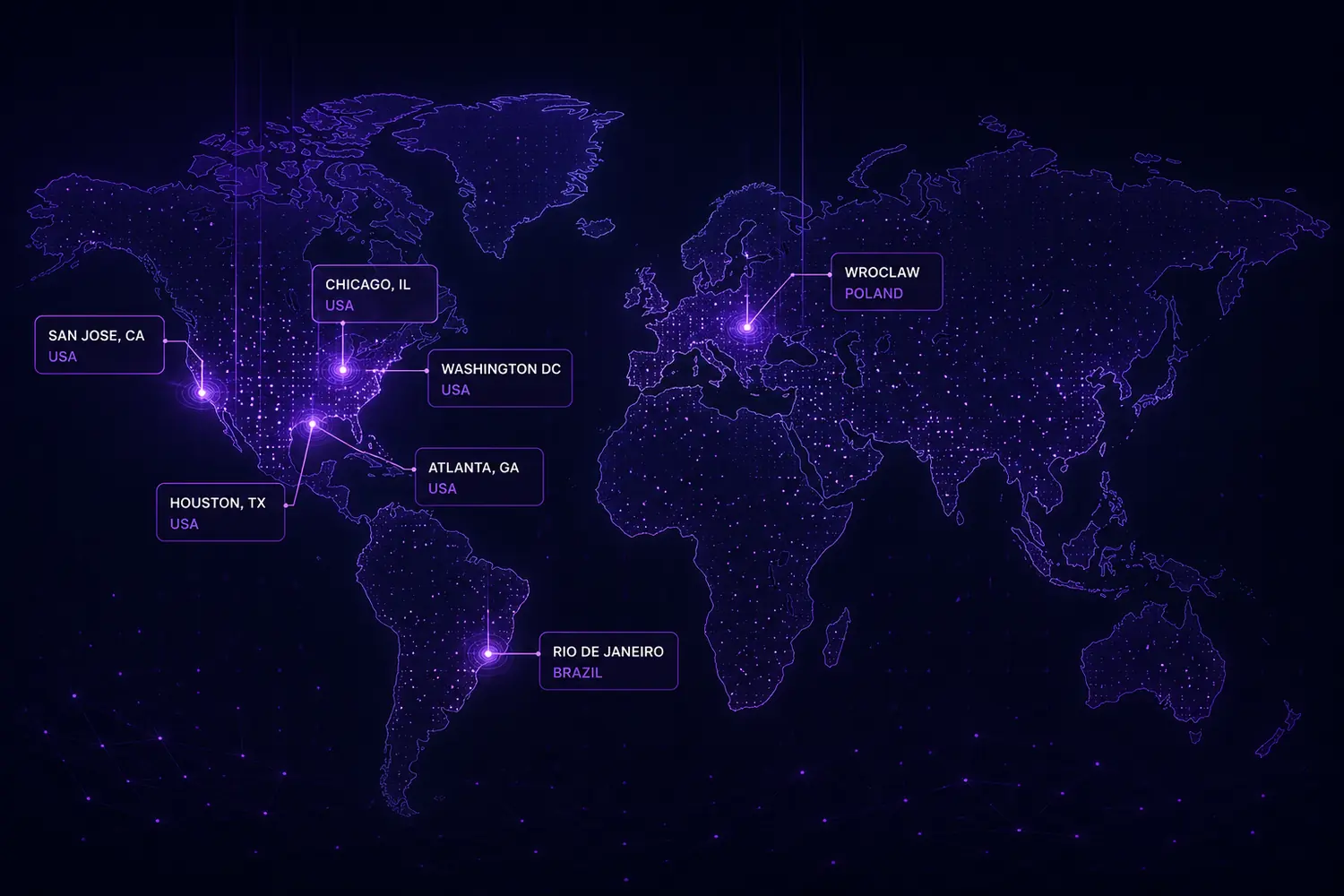
Engagements run out of the cities where the members are: San Jose, Chicago, Washington, Houston, Atlanta, and further out to Wrocław and Rio de Janeiro. Cohorts cross borders, and the operating model does not change when they do, which is the point of writing it down in the first place.
An adaptive assessment that takes about a minute. Three intake questions establish role, sector and scale, and the engine then selects follow-ups based on the answers rather than asking everyone the same set. It scores across technical foundation, operational integration, organisational transformation and governance, names the gaps it found, and routes to a recommended track.
Start the assessment →For organisations that already know what they want scoped. Requests go to consortium practitioners directly and the first response arrives within a day. Completing the assessment first is worth the minute, because it arrives with the request and means the conversation starts from a profile rather than from scratch.
Request access →Navigating strategy, capital allocation and competitive position when the ground is still moving.
Responsible for execution, throughput and the kind of reliability an enterprise requires.
Building the architecture, orchestration and integration that everything else rests on.
Moving from pilot to portfolio to an operating model that survives a change of sponsor.