Industry Council

AI for Social Good Council

Applying the same engineering discipline to humanitarian problems that the other councils apply to industrial ones.

Working with universities, relief organisations and technology partners The council convenes relief organisations, humanitarian logistics researchers, university innovation offices and engineers. DePaul University hosts the consortium's social impact programming, with the American Logistics Aid Network and the University of Kentucky represented on the council.

Purpose

The hardest logistics problems have the least funding

Disaster response, refugee support and food distribution are operationally harder than most commercial supply chains, and the organisations doing that work have a fraction of the resources.

They operate with incomplete information, infrastructure that has often just been destroyed, and decisions that have to be made in hours. Commercial optimisation methods assume a stability that does not exist in those conditions, so they transfer poorly and the sector ends up underserved by the technology that could help it most.

This council exists to close that gap. It brings academic research in humanitarian logistics together with practitioners who have run real operations and engineers who can build what comes out of the conversation. The methods are the same ones the consortium applies in industry. What changes is the constraint set and who benefits.

Objectives

What this council exists to do

Make research usable in the field

A great deal of humanitarian logistics research never reaches an operation. The council works on the translation, pairing academics with relief organisations so that what gets published has a route to being used under real conditions.

Build for interrupted and incomplete data

Relief operations run without reliable connectivity, clean records or stable infrastructure. Methods that assume otherwise fail on arrival, so the council concentrates on approaches that degrade gracefully rather than break.

Prepare responders before the event

Readiness is decided long before a disaster happens. Generated training environments let responders rehearse decisions under pressure at a cost that allows repetition, which is what actually builds judgement.

Strengthen equity in how resources are allocated

Distribution decisions have distributional consequences, and optimising only for efficiency reliably disadvantages the people already hardest to reach. The council treats fairness as an explicit objective rather than a downstream correction.

Widen the workforce pipeline

Students working on humanitarian problems learn engineering and judgement at the same time. The council uses that work to bring people into the field who might otherwise never encounter it.

Carry the case into policy and funding

Humanitarian applications compete badly for attention against commercial ones. Turning evidence into guidance for funders, agencies and legislators is how this work gets resourced at all.

Focus areas

Where the work is concentrated

01

Disaster response

Multimodal AI integrating satellite imagery, weather data and social media feeds to map affected areas and coordinate relief while the situation is still moving.

02

Emergency response training

Generated simulations that let responders rehearse disaster scenarios, improving readiness and the quality of decisions made under pressure.

03

Healthcare access

Analysis of transportation, population density and disease data to decide where mobile clinics should go, which is a question of reach rather than capacity.

04

Food supply chains

Causal methods applied to fair distribution, examining where bottlenecks sit and how demand varies rather than optimising for throughput alone.

Also in scope
Refugee camp resource allocation

Real-time multimodal systems that reallocate resources dynamically as a camp population and its needs change, rather than on a planning cycle that cannot keep up.

Pandemic early warning

Epidemiological analysis combined with travel pattern monitoring, aimed at shortening the gap between a signal appearing and anyone acting on it.

Convening

AI at Work, AI for Good

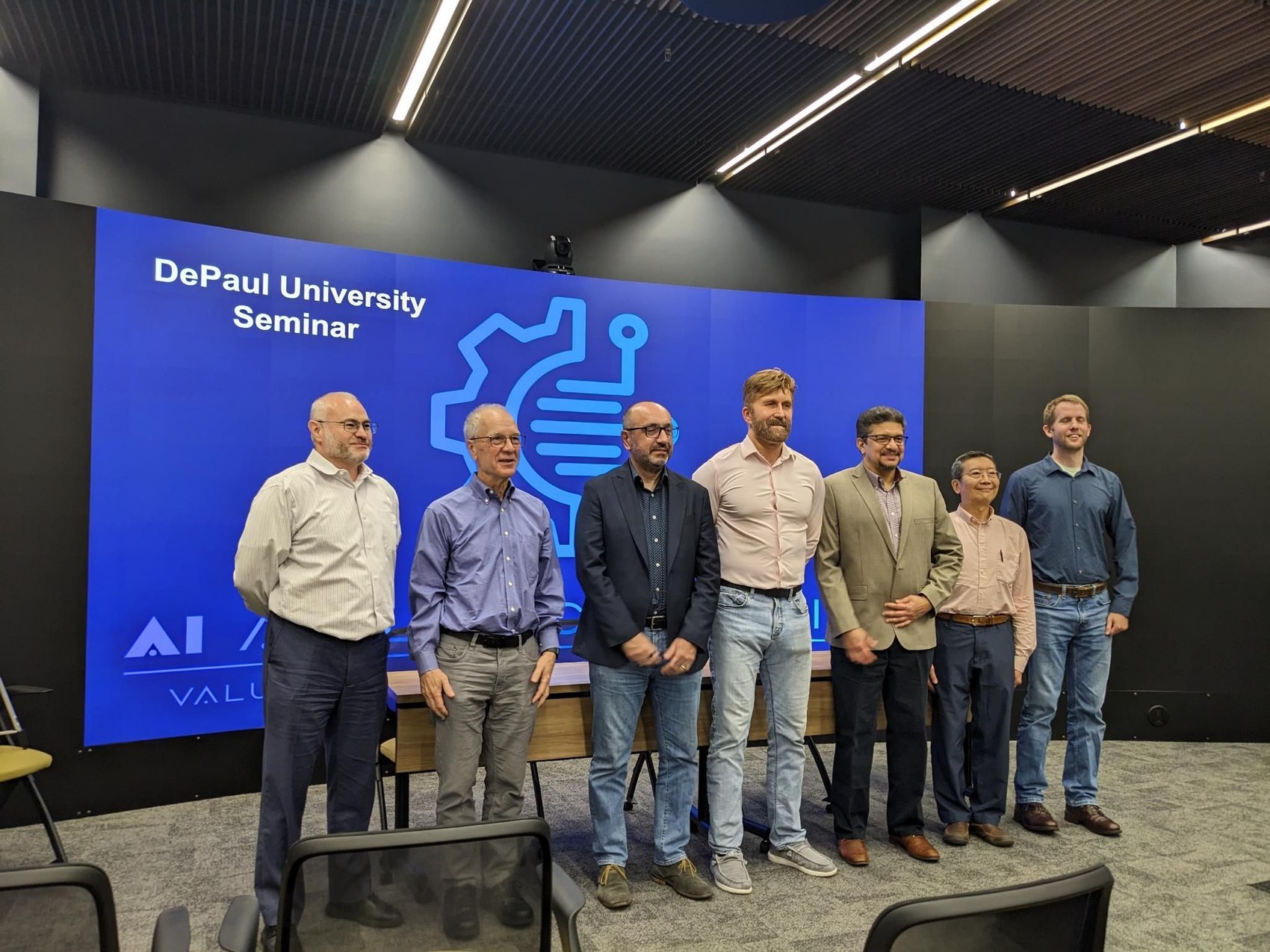
A symposium held at DePaul University in October 2025, bringing industrial practitioners and humanitarian operators into the same room for a day.

The programme ran three tracks covering workforce development, industrial applications including digital twins and workforce analytics, and AI for social good. Putting those together was deliberate. The engineering that improves a plant and the engineering that improves a relief operation are closer than either community usually assumes, and the useful exchange happens when the two are not scheduled apart.

Speakers included Kathy Fulton of the American Logistics Aid Network, Adam Hecktman of For Good Advisory, Professor Nezih Altay of DePaul, Mike McFarlane formerly of BASF, Martin Gonzalez of bp and Elias Brown of Vallourec.

AI for Social Good session at DePaul University
AI for Social Good programming at DePaul University, the council's principal academic host.
Participating organisations

Who this council works with

DePaul UniversityResearch university
American Logistics Aid NetworkHumanitarian logistics · member organisation
University of KentuckyResearch university
NetflixEngineering
For Good AdvisoryAdvisory · social impact
The council

Council members

Relief practitioners, humanitarian logistics researchers, university innovation leaders and engineers. The council is still growing and actively recruiting.

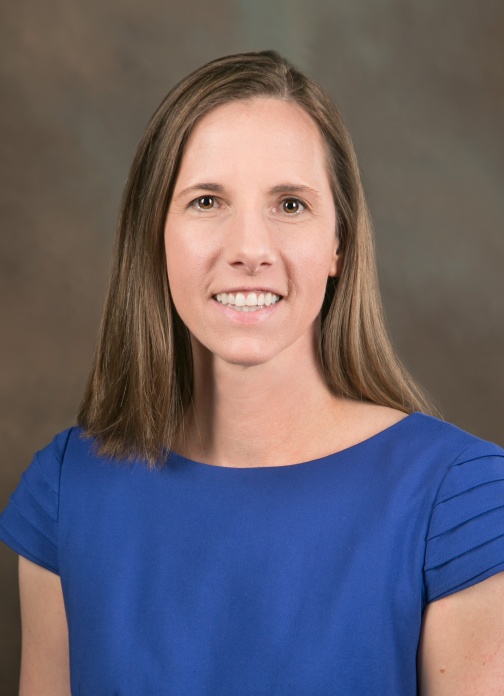
Kathy Fulton
American Logistics Aid Network

Kathy Fulton

Executive Director

Serenity Wright, Ed.D
UK Innovate · University of Kentucky

Serenity Wright, Ed.D

Senior Executive Director for Innovation, Community Health and Societal Impact

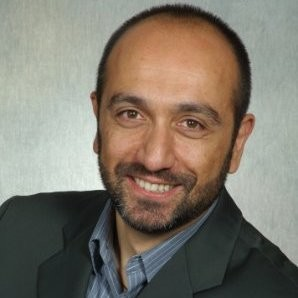
Nezih Altay
DePaul University

Nezih Altay

Professor of Humanitarian Logistics and Supply Chain Management

Prasanna Vijayanathan
Netflix

Prasanna Vijayanathan

Senior Technical Lead

Join

Join the AI for Social Good Council

This is the newest of the six councils and it is still being built. If you work in humanitarian logistics, disaster response, global health or nonprofit technology, there is a seat here.

What it involves

Members join quarterly working sessions and take part in the council's research and policy work. In practice this comes to about a day each quarter.

What you get

You get access to engineers and researchers who will work on your problem, students who can build, and a route into the consortium's wider industrial membership.

What we ask

We ask relief organisations to be candid about operating constraints. Solutions designed against an idealised field operation are worse than no solution, because they consume time nobody has.

Cost

[CONFIRM — state dues plainly, or “no fee” if that is the model.]

Apply to join this council →