Research university
Manufacturers do not need another demo. The Advanced Manufacturing Lab runs an AI Sandbox with Penn State and the University of Kentucky where solutions are tested, broken and refined before they are trusted anywhere near a production line.
The model A joint programme of the AI Applied Consortium, Penn State and the University of Kentucky, connected to MxD, the national digital manufacturing institute in Chicago. The sandbox exists so that a manufacturer never has to bet a production line on an untested idea.
Every solution the lab produces goes through staged testing in a controlled environment before it is allowed anywhere near full-scale deployment. That single rule is what gives the lab’s results their credibility. It separates the lab's work from a vendor demo.
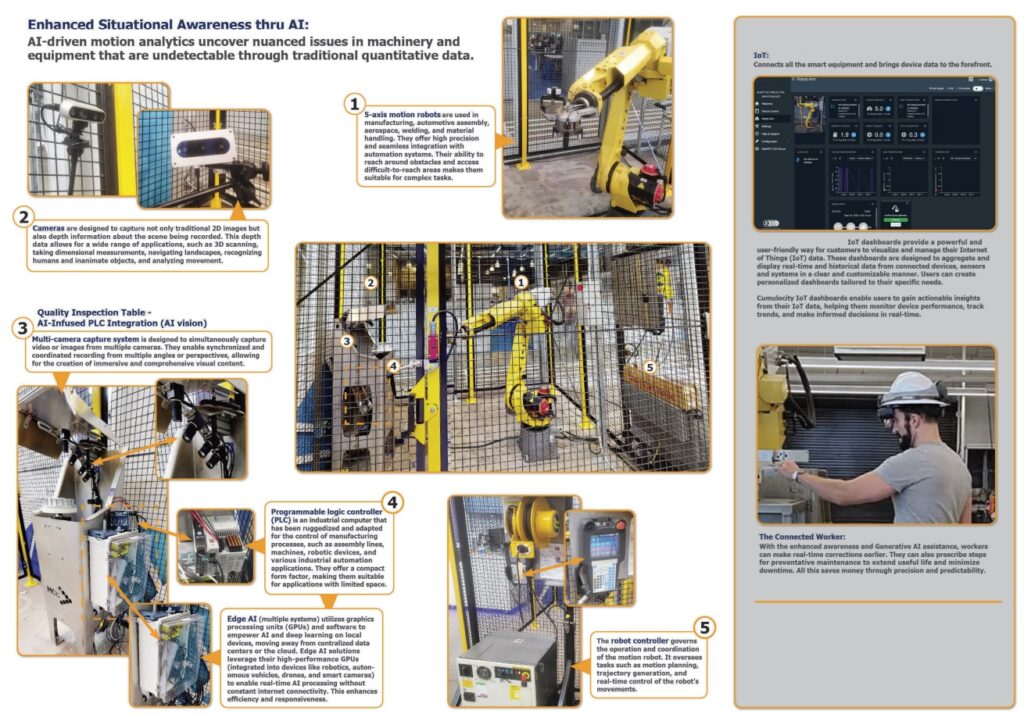
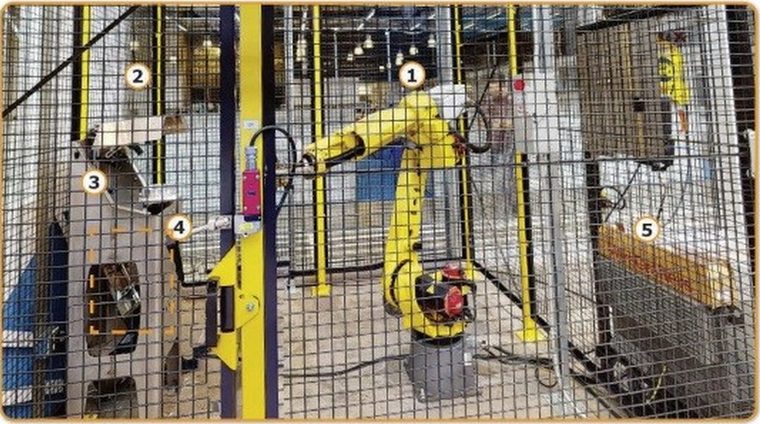
The sandbox is a working manufacturing cell: collaborative robots handling assembly and quality inspection, depth cameras over the inspection table, and live IoT sensor data feeding the models that will eventually run against it. Solutions are developed against real equipment behaving the way real equipment behaves, which is to say imperfectly.
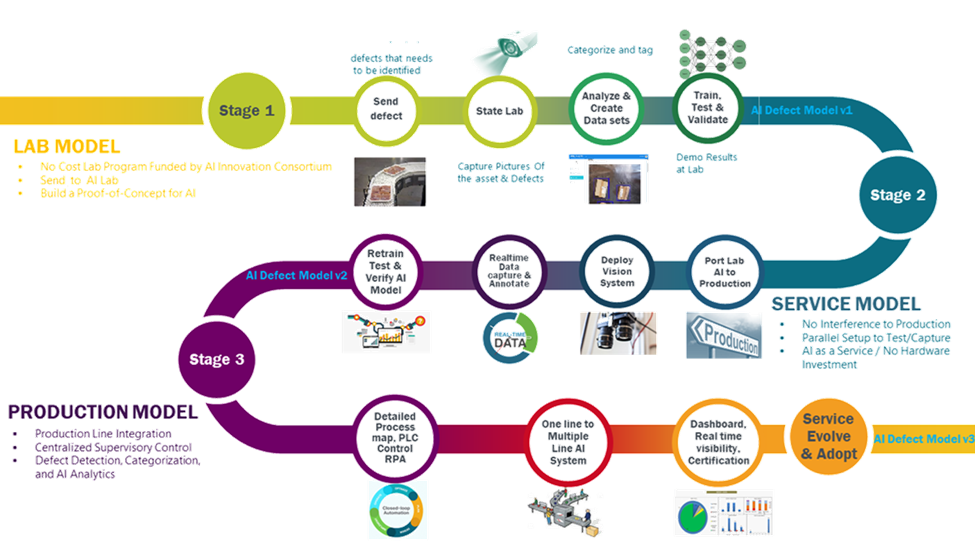
An idea that survives the sandbox earns a pilot cell. A pilot that survives production conditions earns the floor. Nothing skips a stage.
AI-powered vision systems trained to catch the defects a line worker would miss, on the inspection table and in motion on the line.
Robots working assembly and quality tasks alongside people, with AI handling the perception and judgement the fixed automation of the last generation could not.
Models trained on live sensor data to call a failure before it stops the line — plus production-line optimisation through AI simulation before a single machine is moved.
The lab runs a deliberate cycle: define the problem with the manufacturer, build against the sandbox, test to failure, refine, and only then stage onto the floor.
The workflow was designed for computer-vision engagements first, because vision is where manufacturers most often get burned by demos that work in perfect light on clean parts. In the sandbox the parts are not clean and the light is not perfect, and the models are better for it.
The same loop now carries every engagement type the lab takes on, from defect detection to sustainability monitoring.
“American manufacturers are in a unique position to lead not just in AI adoption, but in the physical infrastructure that powers AI itself. We're not just looking at how manufacturers can use AI, we're examining how they can produce the next generation of energy-efficient, scalable, and modular AI infrastructure components.”Michael BurgessVP Operations, Crenlo Engineered Cabs
The lab sits inside the manufacturing network contributing to the consortium's applied research.
Research university
Research university

National institute
Association partnerIn May 2025 the lab's academic partnership went public: the AI in Manufacturing Symposium, co-hosted with the University of Kentucky at the Gatton Student Center in Lexington.
Faculty from the Institute for Sustainable Manufacturing presented alongside consortium practitioners, a machine-learning spot-welding project shared the stage with a keynote on building industrial intelligence, and a student poster session put the pipeline on display. The lab is where that pipeline leads.
Partners bring the problem and the data. Students and faculty bring the build. The consortium sets the terms so both sides know where the work goes.
Propose a proof of concept. You supply the use case, the data and a technical contact; the sandbox supplies the cell and the team.
Join a live project with a commercial partner through Penn State or the University of Kentucky.
Join the academic network and put your researchers on manufacturing problems with data attached.