Research university
Most industrial AI runs in the cloud, far from the equipment it serves. This lab, run with Penn State, puts the intelligence inside the controllers that already run the line, making decisions in milliseconds at the machine.
The model A research partnership between the AI Applied Consortium and Penn State, anchored at the DuBois campus. The lab develops AI that lives inside industrial controllers rather than in a data centre an internet connection away.
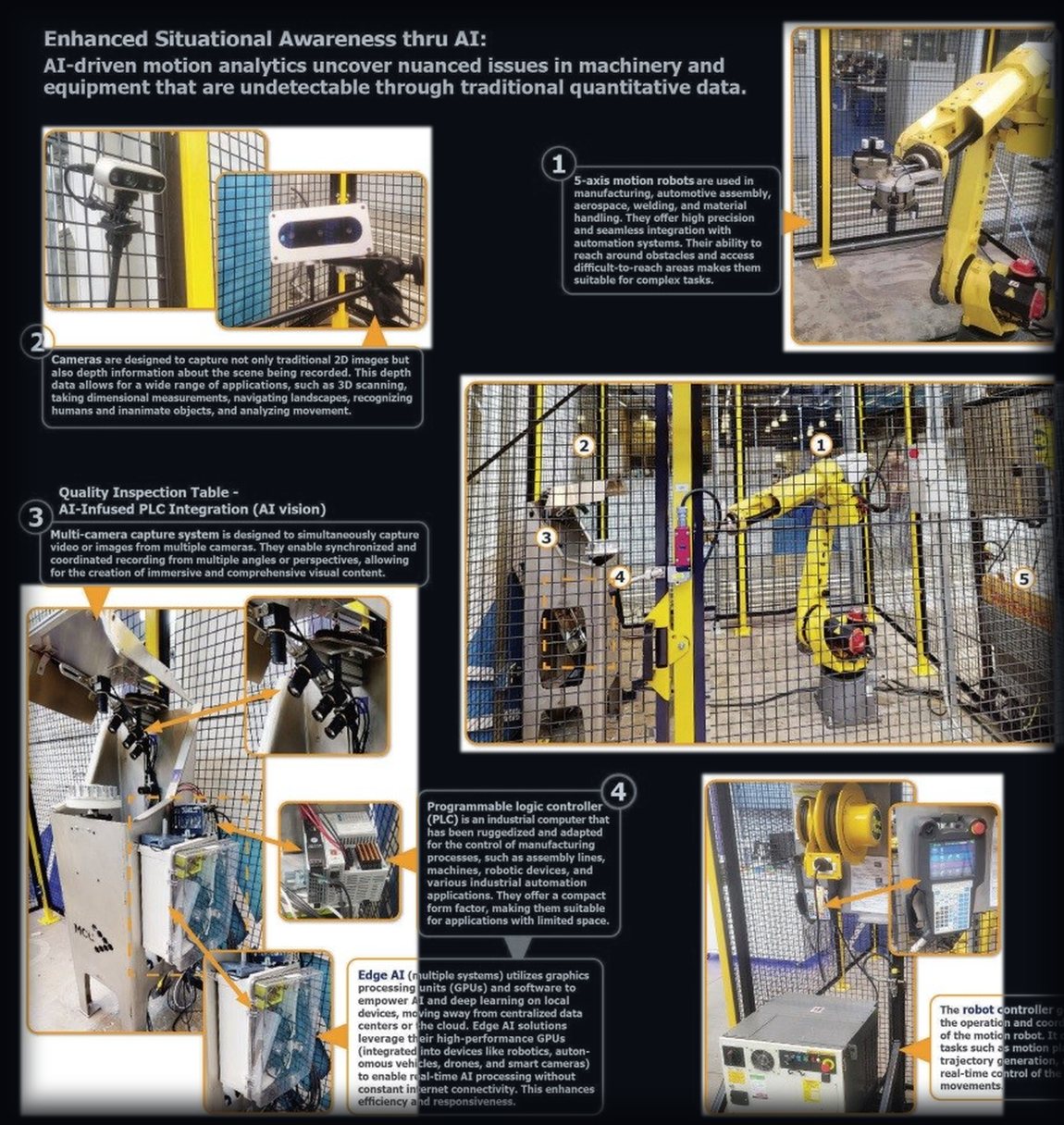
Programmable logic controllers already run every serious production line in the world. The lab's research question is simple to state and hard to do: what would it take for those controllers to make intelligent decisions themselves?
A cloud model that takes three hundred milliseconds to answer is useless to a machine that needed the answer in ten. The lab's Smart PLC work moves inference onto the controller itself, so the decision happens at the speed of the process it governs, keeps working when the network does not, and never sends production data anywhere it does not need to go.
It is foundational work, and it determines whether edge AI delivers real operational value.
Research and development toward controllers that run trained models natively, within the memory, compute and determinism constraints real PLCs impose.
Model architectures and quantisation approaches that hold accuracy while meeting the millisecond deadlines of a moving line.
Getting edge intelligence into the installed base — the controllers plants already own — rather than assuming a greenfield that almost no manufacturer has.
The lab starts from the constraints of the plant floor — cycle times, safety interlocks, twenty-year-old equipment — and designs the AI to fit them, not the other way round.
That ordering matters. Most edge AI research assumes hardware a plant will never install. The lab's work is judged against the controllers, networks and maintenance realities its industry partners actually operate, which is why its results transfer.
Findings feed directly into the Advanced Manufacturing Lab's sandbox, where controller-level intelligence meets the robots and vision systems it will have to coordinate with.
The lab sits inside a wider network contributing to the consortium's edge and controls research.
Research university
National instituteSmart PLC research is the base layer of the consortium's manufacturing stack. What proves out here moves to the AI Sandbox, and from the sandbox to partner floors.
The two labs are deliberately staged: this one answers whether the controller can carry the intelligence, the Advanced Manufacturing Lab answers whether the intelligence survives contact with a working cell. A manufacturer engaging one gets the benefit of both.
Partners bring the problem and the data. Students and faculty bring the build. The consortium sets the terms so both sides know where the work goes.
Bring a control problem the cloud cannot solve. You supply the constraints; the lab supplies the research team.
Join edge AI research with industrial partners through Penn State.
Join the network and put controls and embedded-systems researchers on problems with hardware attached.