University
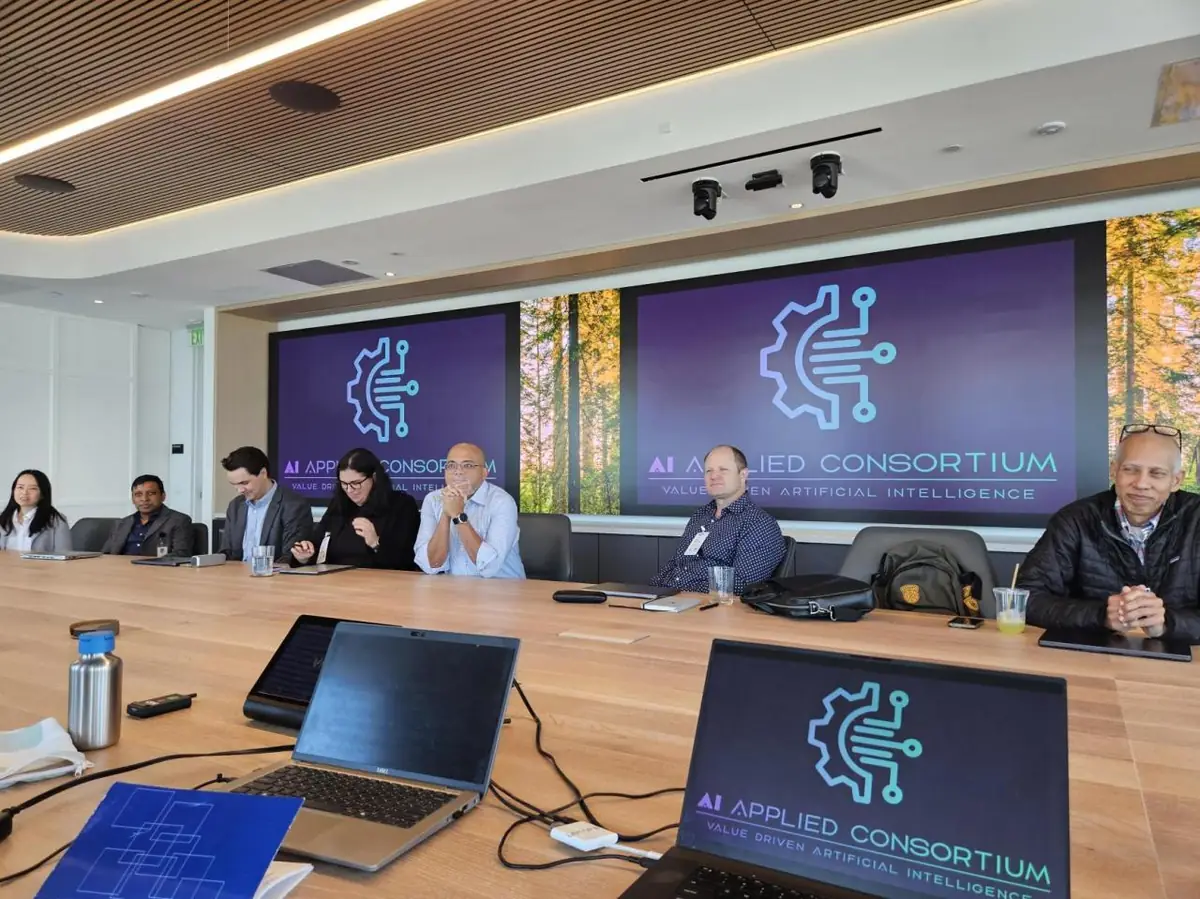
Every model gets proven somewhere first. For the consortium's industry incubators, that place was the University of Louisville College of Business, where the InnovaLab opened in 2020 with AWS, GE Appliances and Amgen among its launch partners.
The model The consortium’s incubator model was proven here first: industry-specific incubators inside the University of Louisville College of Business, giving pharmaceutical, energy, financial and manufacturing companies a practical platform to take AI from concept to working prototype.
Before there were six councils and a national lab network, the open question was whether Fortune 1000 companies and a university could build AI together in practice. Louisville answered that question.
The InnovaLab launched inside the College of Business with AWS, GE Appliances and Amgen among its partners, alongside a founding agenda that reads like the consortium’s charter in miniature: build standards and best practices that drive AI adoption, and take privacy, data governance and bias seriously while doing it.
Its industry-specific incubators were the original version of what the consortium now operates at national scale — a grass-roots development environment where participants leverage consortium experts, engineering tools and rapid delivery platforms to see their AI concepts come to life.
Sector-specific tracks for pharmaceutical, energy, financial and manufacturing companies — the direct ancestor of today’s council system.
A practical platform for taking an AI concept to a working system, with consortium experts and delivery tooling attached — the pattern every consortium lab now runs.
Best practices for adoption, privacy, data governance and bias — the thread that leads directly to the consortium’s policy work and the NAW AI Governance Architecture.
“The consortium helped us become a center of knowledge dissemination and together we helped local businesses.”Jeff GuanDean, University of Louisville
The lab put Fortune 1000 practitioners and Louisville-area businesses at the same table, which is why the university describes the result as knowledge dissemination rather than technology transfer.
The distinction matters. Technology transfer moves a system from one owner to another; knowledge dissemination leaves both sides able to build the next one themselves. That is the standard the consortium’s labs have been held to since.
The partners at the table when the model was first proven.
University
Cloud
PharmaceuticalEverything the consortium now runs — the council system, the Digital Oilfield Lab, the AI Sandbox, the national programmes — follows the pattern first proven in Louisville.
The InnovaLab is presented here as founding history, and deliberately so: it is the part of the record that explains why the consortium’s model works, because it worked before the consortium was national.
Partners bring the problem and the data. Students and faculty bring the build. The consortium sets the terms so both sides know where the work goes.
The Louisville model is repeatable. Bring a college, a region and industry relationships worth activating.
Join the incubator model where it now runs — through the councils and the national lab network.
The relationships built here still stand. Reach the consortium through the council system.