Industry Council

Financial Services Council

Fraud, risk and customer intelligence at a scale where a fraction of a percentage point moves billions.

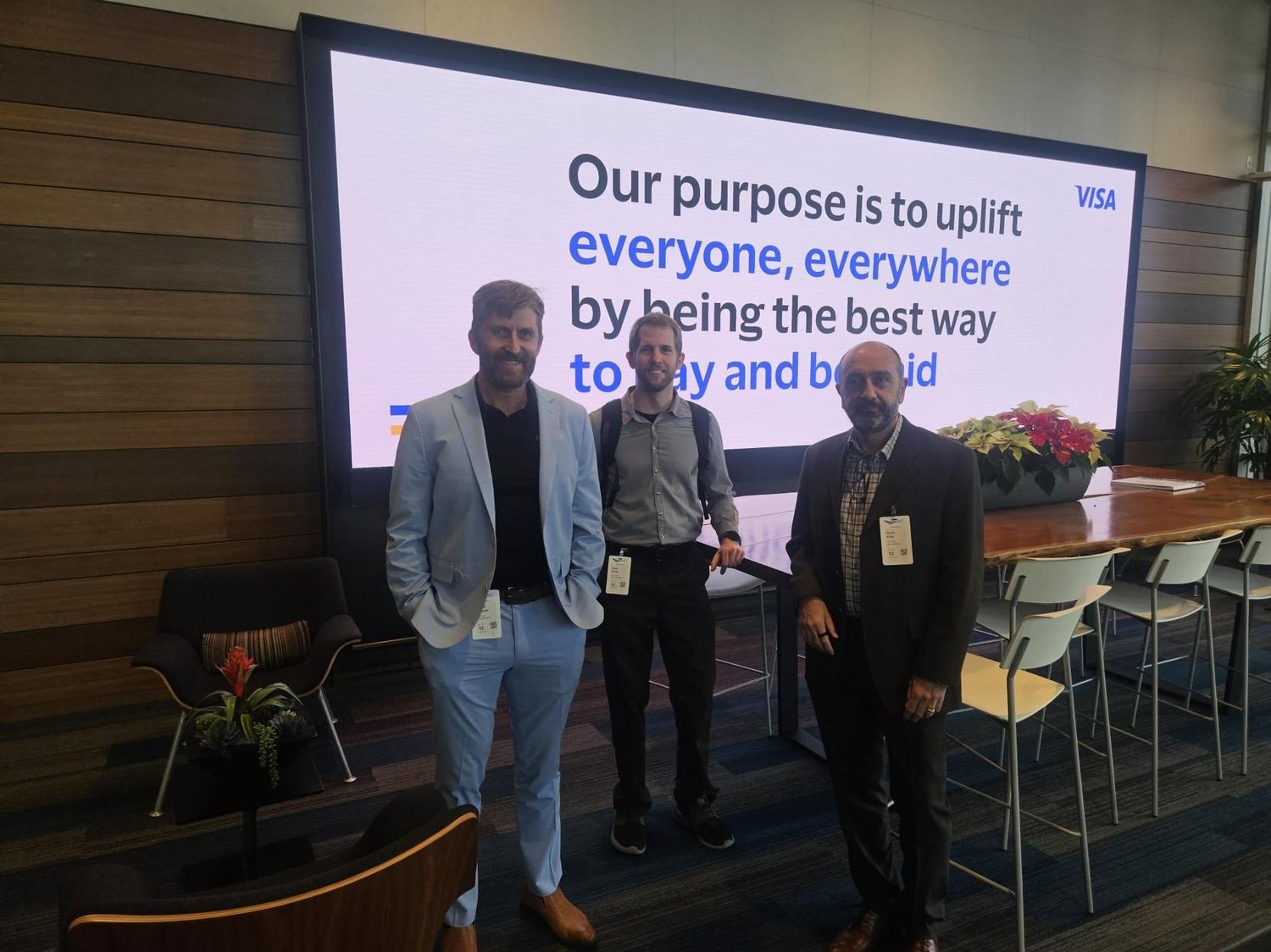
Convening inside the industry The council has held its working sessions at Visa facilities in San Francisco and Foster City, bringing payments, banking, engineering and academic members together on the questions institutions cannot answer alone.

Purpose

A sector where errors carry real regulatory and financial consequences

Financial services runs AI under three constraints most industries never face at once: a regulator who can ask how a decision was made, an adversary actively working to defeat the model, and a customer who leaves after one bad experience.

Those constraints are why so much of what works elsewhere does not transfer. A model that cannot be explained is not deployable when a declined application has to be justified. A fraud model that is accurate today degrades as soon as the people it catches adapt to it. And the data that would make everything easier is the data institutions are least able to share.

This council works on the problems that sit in that intersection, with people who have carried responsibility for systems operating at national and global scale.

Objectives

What this council exists to do

Make sharing possible without sharing data

The sector's most valuable signals sit inside institutions that cannot legally or commercially pool them. Synthetic data and privacy-preserving methods are how a fraud pattern learned at one bank becomes useful at another, and the council treats that as its central technical problem.

Keep pace with adversaries

Fraud is the one AI application where the environment fights back. Models that are not retrained against adaptive behaviour decay in production rather than at the point of testing, and the council works on how institutions detect that decay before losses reveal it.

Build explainability that satisfies a regulator

An explanation that convinces a data scientist is not the same as one that satisfies a supervisor or a customer contesting a decision. The council works on what evidence has to exist at the point a model declines someone.

Move personalisation past segmentation

Combining transaction history, correspondence and service contact allows advice tailored to a specific person rather than a cohort. The line between useful and intrusive is the part worth getting right, and it is a design decision rather than a technical one.

Test agentic systems where money moves

Agents that execute transactions rather than recommend them raise questions about authority, audit and reversal that the sector has not settled. Working through those before deployment is cheaper than after.

Convene across institutional lines

Competitors face identical threats and identical supervisors. Sessions run at member facilities under conditions that let people describe what actually happened rather than what their communications team would prefer.

Focus areas

Where the work is concentrated

01

Synthetic data for risk modelling

Generative methods producing secure datasets that retain statistical validity, so risk models can be tested rigorously without exposing real customer records.

02

Real-time fraud detection

Models monitoring billions of daily transactions for unusual patterns, with the aim of stopping fraud as it happens rather than reporting it afterwards.

03

Customer behaviour analytics

Multimodal analysis across transactions, written enquiries and call records to personalise advice and anticipate churn before it happens.

04

Market intelligence

Causal methods relating economic indicators, news sentiment and global events, rather than pattern matching on price history alone.

Also in scope
Conversational portfolio guidance

Systems that combine real-time financial news with a client's stated preferences to produce recommendations, with the disclosure and suitability obligations that implies.

Automated claims processing

Computer vision applied to validating insurance documentation and assessing damage, where the accuracy question and the fairness question are the same question.

Convening

Working sessions at Visa

Two closed sessions hosted inside Visa facilities, which is a level of access that says something about how the council operates.

Signals to Outcomes: AI at Mission Rock, October 2025, at Visa's global headquarters in San Francisco. An invitation-only working session on agentic AI and hyperpersonalisation, structured around a keynote, a panel on moving proof of concept into production, a regulatory briefing, and roundtables that ended with participants holding thirty, sixty and ninety day pilot plans rather than notes.

Applied AI Research Roundtable, December 2024, at Visa's headquarters in Foster City. Sessions on AI in banking, cybersecurity, humanitarian impact and financial systems, with parallel workshops on smart cities and advanced manufacturing. Speakers came from Visa, Bank of America and the University of Ottawa.

Both were built to produce commitments. A day that ends with a dated plan is worth more than one that ends with agreement.

Next session · tentative Bay Area working session, autumn 2026

The council is convening technology and financial services executives from across the Bay Area for its next closed session. The agenda is being set with members now, and the working themes are agentic systems where money moves, privacy-preserving collaboration between institutions, and what explainability has to look like when a supervisor asks.

Dates to be confirmed. Attendance is by invitation; council members are invited automatically.

Council members at Visa
Council members at Visa, Foster City.
Participating organisations

Who this council works with

VisaPayments
Bank of AmericaBanking
Stevens Institute of TechnologyResearch university
University of OttawaResearch university
In their own words

The council on record

Watch
APRIL 2026 · 55 MIN

Agentic AI, Enterprise Reality and What Actually Scales

Sam Hamilton, former Senior Vice President at Visa, with Konrad Konarski.

Watch
EPISODE 08 · 21 OCTOBER 2025

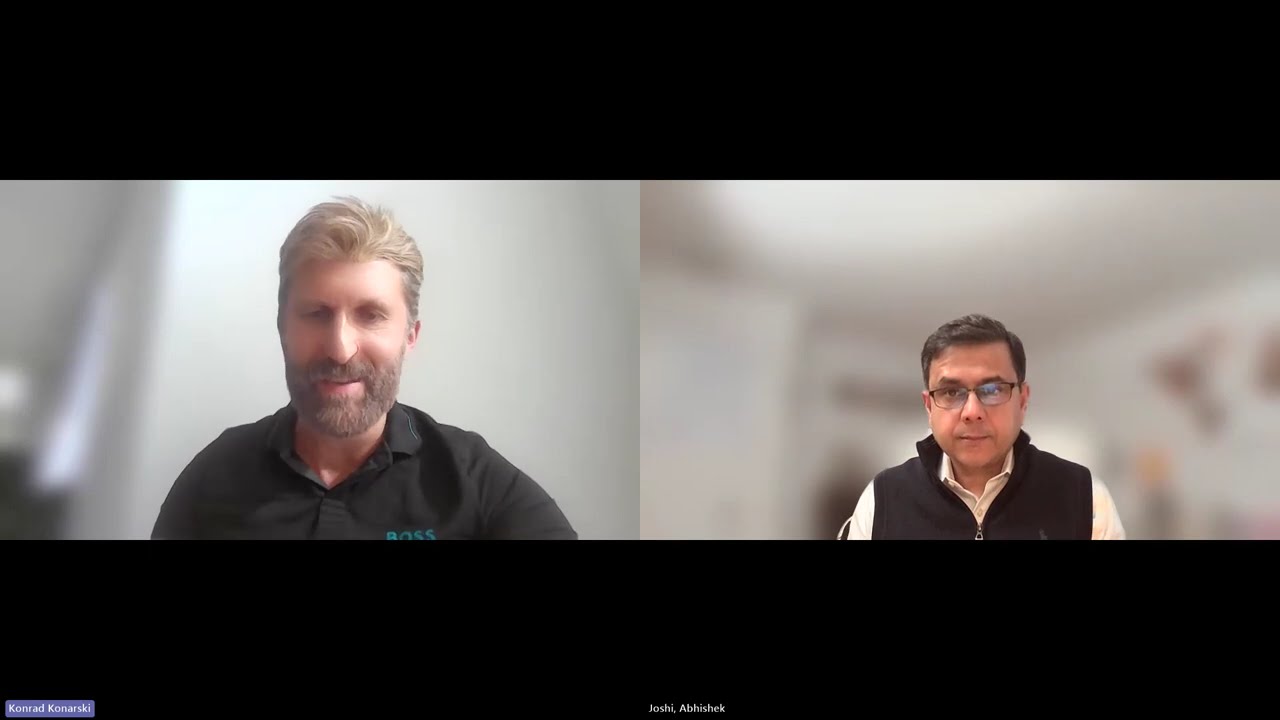
Hyper-personalisation using AI

With Visa's Head of Consumer Credit and Konrad Konarski.

All episodes on YouTube →
The council

Council members

Payments, banking and academic members. The council is growing and actively recruiting, particularly in risk and regulatory functions.

Visa

Sam Hamilton

Senior Vice President (Former)

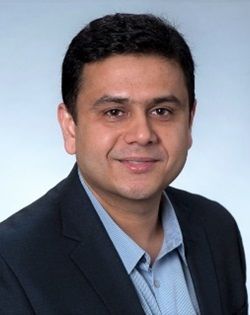
Abhishek Joshi
Visa

Abhishek Joshi

Vice President

Chris Isayan
Bank of America

Chris Isayan

Vice President (Former)

Salem Hadim
 

Salem Hadim

BFSI Consulting Partner · formerly Stevens Institute of Technology

Join

Join the Financial Services Council

Membership suits people accountable for fraud, risk, data or AI inside a bank, payments network, insurer or asset manager, and researchers working on privacy-preserving methods who want their work tested against production constraints.

What it involves

Members join quarterly working sessions and one hosted symposium, and take part in the council's research and policy work. In practice this comes to about a day each quarter.

What you get

You get peers at competing institutions facing identical threats and identical supervisors, and sessions run so that people can speak plainly.

What we ask

We ask members to describe what happened accurately, including losses and failed deployments. That is the only reason anyone learns anything here.

Cost

[CONFIRM — state dues plainly, or “no fee” if that is the model.]

Apply to join this council →